
Many women describe the same experience: falling asleep feeling perfectly comfortable, only to wake up a few hours later feeling hot, sweaty, and wide awake.
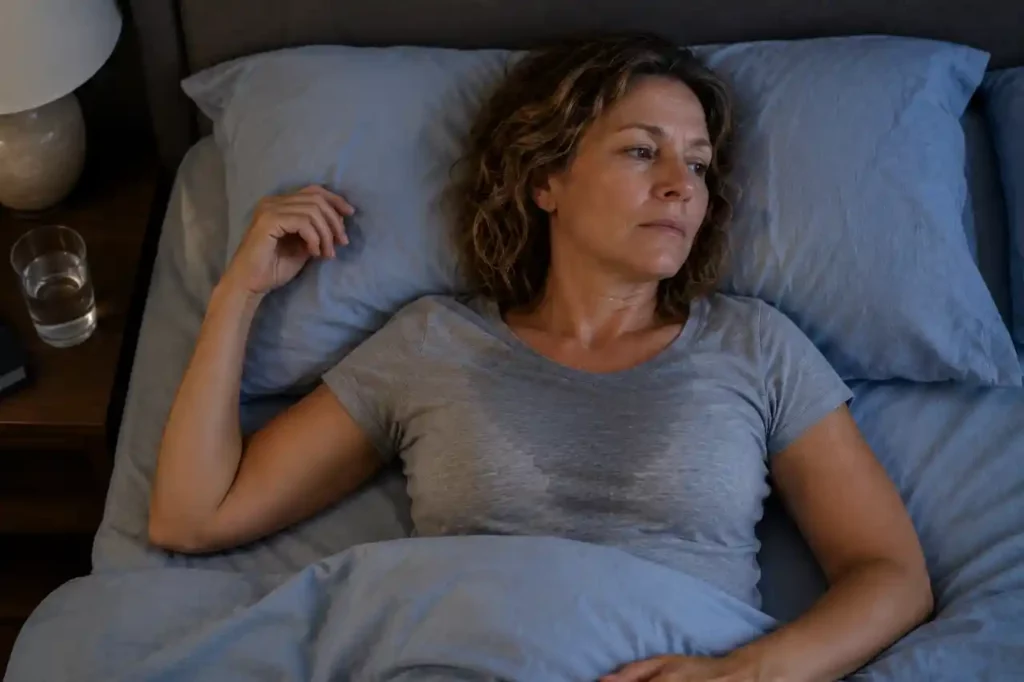
Night sweats are one of the most common symptoms of perimenopause and can make it difficult to get a good night’s sleep. Some women wake up slightly damp, while others find themselves changing clothes or throwing off the covers in the middle of the night.
While hormonal fluctuations are often the main reason, several other factors can influence how often night sweats occur and how much they affect your sleep.
What Are Night Sweats?
Night sweats are more than simply feeling warm under the covers. They occur when the body suddenly activates its cooling mechanisms during sleep, leading to noticeable sweating.
They’re closely related to hot flashes. In fact, many experts consider night sweats to be nighttime hot flashes that happen while you’re asleep.
What Causes Night Sweats During Perimenopause?
The most common cause is hormonal fluctuation. During perimenopause, estrogen levels can rise and fall unpredictably, affecting the body’s temperature regulation system.
When the brain interprets your body temperature as being too high, it activates cooling mechanisms such as increased blood flow and sweating. This can result in a sudden feeling of heat followed by sweating, even if the room itself is not particularly warm.
For a deeper explanation of the underlying process, see What Causes Hot Flashes During Perimenopause?
Why Do Night Sweats Disrupt Sleep So Much?
One reason night sweats can be especially frustrating is that they interrupt sleep. Even if an episode only lasts a few minutes, it may leave you awake long afterward.
Over time, repeated sleep disruptions can contribute to fatigue, irritability, and difficulty concentrating during the day.
If nighttime symptoms are one of your biggest challenges, read our guide on why hot flashes can feel more noticeable at night.
Common Triggers That Can Make Night Sweats Worse
- A warm bedroom
- Heavy bedding
- Alcohol in the evening
- Spicy foods close to bedtime
- Caffeine late in the day
- Stress and anxiety
- Poor sleep quality
Not everyone reacts to the same triggers. Keeping track of your symptoms may help you identify patterns and make adjustments that improve comfort.
How to Reduce Night Sweats During Perimenopause
There is no single solution that works for everyone, but many women find that a combination of small changes can make a meaningful difference.
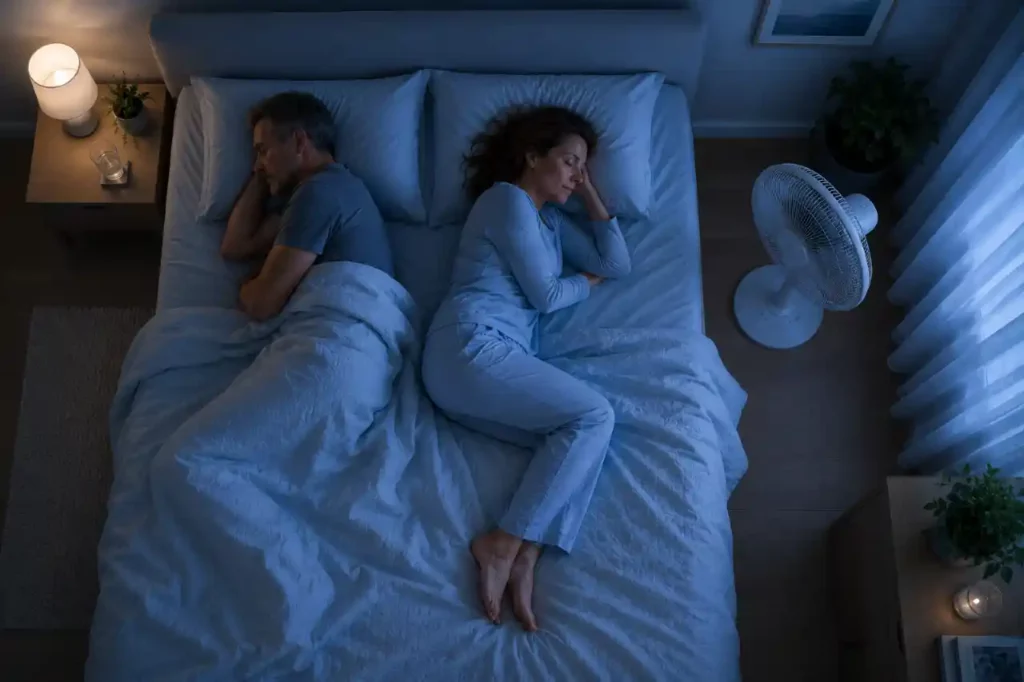
- Keep your bedroom cool.
- Choose lightweight, breathable bedding.
- Wear moisture-wicking sleepwear.
- Avoid alcohol close to bedtime.
- Use a fan if it helps you stay comfortable.
- Try a lukewarm shower before bed if you tend to feel overheated at night.
- Practice relaxation techniques before bedtime.
Some women also find that small practical adjustments make night sweats less disruptive. Keeping a spare pillowcase nearby can be helpful if your pillow becomes damp during the night. If your sleep shirt tends to get sweaty, consider keeping a clean T-shirt or pajama top within reach so you can quickly change into something dry and get back to sleep.
For more strategies, see How to Reduce Hot Flashes During Perimenopause Naturally.
When Should You Talk to a Doctor?
Night sweats are common during perimenopause, but it’s worth speaking with a healthcare professional if they are severe, suddenly worsen, or are accompanied by other unexplained symptoms.
A doctor can help rule out other possible causes and discuss treatment options if symptoms are significantly affecting your quality of life.
Frequently Asked Questions
Are night sweats a sign of perimenopause?
They can be. Hormonal fluctuations during perimenopause are a common cause of night sweats, although other conditions can also contribute.
Can you have night sweats before menopause?
Yes. Many women begin experiencing night sweats during perimenopause, which can start several years before menopause itself.
Why do I wake up drenched in sweat?
For some women, nighttime hot flashes trigger intense sweating that can soak clothing or bedding. Hormonal fluctuations are often involved, but other causes should be discussed with a healthcare professional if symptoms are severe.
Can alcohol make night sweats worse?
Many women find that alcohol can trigger or worsen nighttime symptoms, particularly when consumed close to bedtime.
Final Thoughts
Night sweats during perimenopause can be frustrating, but understanding the causes and identifying your personal triggers can help you manage them more effectively. While hormonal fluctuations are often the underlying reason, practical adjustments such as cooler bedding, lightweight sleepwear, and keeping a spare shirt nearby may help make difficult nights a little easier.
Affiliate Disclosure
This article may contain affiliate links. If you purchase through these links, we may earn a small commission at no extra cost to you. This helps support the site and allows us to continue creating helpful content.