
Many women notice that hot flashes feel more disruptive at night than during the day. You may fall asleep without a problem only to wake up suddenly feeling overheated, sweaty, and uncomfortable.
If you’re wondering why your hot flashes are worse at night, you’re not imagining it. Nighttime symptoms can feel more intense because of changes in body temperature, sleep patterns, hormone fluctuations, and even how warm or comfortable your bedroom feels.
Understanding what’s happening can help you find practical ways to make nights more comfortable.
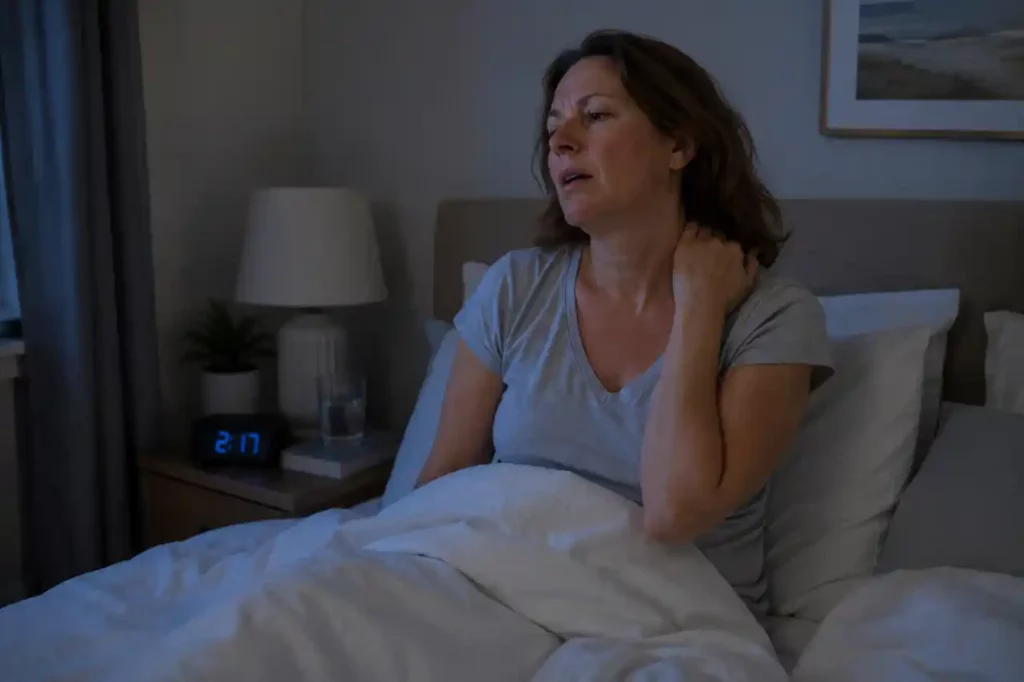
Why Are Hot Flashes Often Worse at Night?
Hot flashes can happen at any time of day, but many women find them more noticeable after sunset and during sleep.
One reason is that the body’s internal temperature naturally changes throughout the day. Core body temperature typically drops slightly in the evening as part of the normal sleep process. During perimenopause, fluctuations in estrogen may make the body’s temperature regulation system more sensitive, increasing the likelihood of a hot flash.
When a hot flash occurs at night, it can also wake you from sleep, making the experience feel more intense and memorable than a daytime episode.
The Connection Between Sleep and Hot Flashes
Sleep and hot flashes often influence each other. A hot flash can interrupt sleep, and poor sleep may make you more sensitive to symptoms the following night.
This can create a frustrating cycle where sleep disruption and hot flashes seem to reinforce one another.
If you’re new to these symptoms, it may help to understand what causes hot flashes during perimenopause in the first place.
Common Nighttime Triggers
Although hormonal changes are the underlying cause, certain triggers may make nighttime symptoms worse.
- A warm bedroom
- Heavy bedding
- Alcohol in the evening
- Caffeine late in the day
- Stress and anxiety
- Spicy meals close to bedtime
- Poor sleep habits
Not everyone has the same triggers, but many women find that tracking symptoms can help identify patterns.
Are Night Sweats and Hot Flashes the Same Thing?
They’re closely related. Many women experience hot flashes during the day and night sweats while sleeping. In many cases, night sweats are simply hot flashes that occur at night and are accompanied by noticeable sweating.
Some women mainly experience a sudden feeling of heat, while others wake up drenched in sweat. The experience varies from person to person.
If sweating is one of your biggest concerns, read our guide on night sweats during perimenopause: causes and solutions.
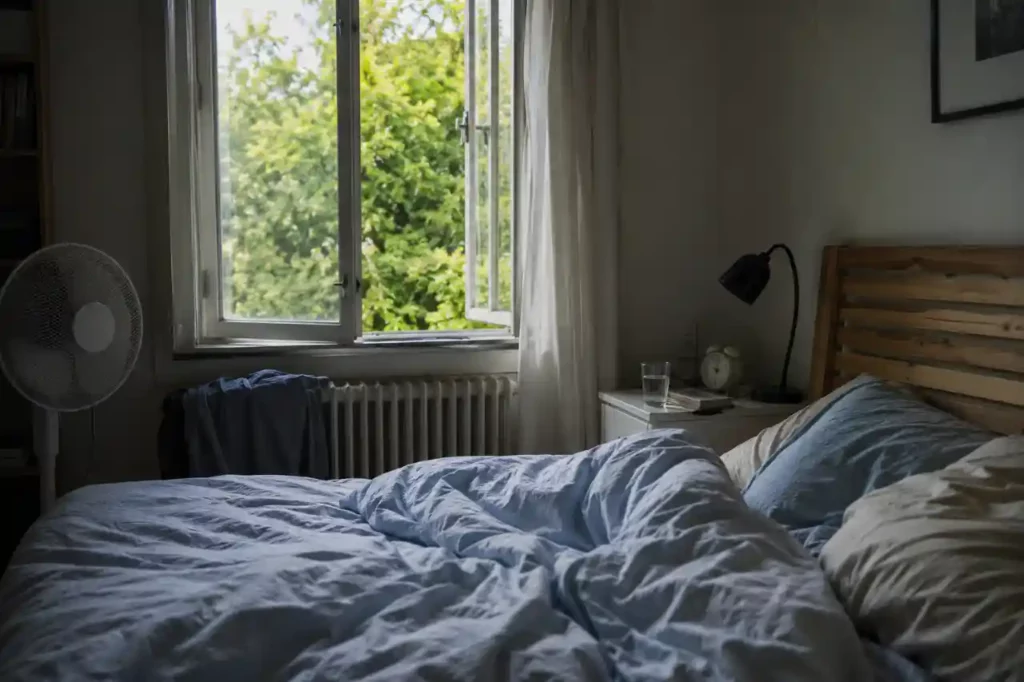
How to Make Hot Flashes Less Noticeable at Night
While there is no guaranteed way to eliminate hot flashes, many women find that a few simple changes improve comfort and sleep quality.
- Keep the bedroom cool
- Choose breathable bedding
- Wear lightweight sleepwear
- Avoid alcohol close to bedtime
- Practice relaxation techniques before bed
- Maintain a consistent sleep schedule
- Use a fan if it helps you stay comfortable
Some women also find that a lukewarm shower before bed helps them feel more comfortable. While it won’t prevent hot flashes, it may help support the body’s natural cooling process before sleep.
We discuss these strategies in more detail in How to Reduce Hot Flashes During Perimenopause Naturally.
Frequently Asked Questions
Why do I only get hot flashes at night?
Some women notice symptoms primarily at night because sleep, body temperature changes, and the bedroom environment can make hot flashes more noticeable.
Do hot flashes get worse before bed?
They can. Natural changes in body temperature and certain evening habits may increase the likelihood of symptoms in some women.
Can alcohol make nighttime hot flashes worse?
Many women report that alcohol can trigger or intensify hot flashes, particularly when consumed in the evening.
Are night sweats the same as hot flashes?
Night sweats are generally considered a nighttime form of hot flashes that occur during sleep and are often accompanied by noticeable sweating.
Final Thoughts
If your hot flashes seem worse at night, you’re not alone. Changes in body temperature, hormone fluctuations, sleep disruption, and environmental factors can all contribute to nighttime symptoms.
While hot flashes may not disappear overnight, understanding your triggers and making small adjustments to your sleep environment can often make nights more manageable.
Affiliate Disclosure
This article may contain affiliate links. If you purchase through these links, we may earn a small commission at no extra cost to you. This helps support the site and allows us to continue creating helpful content.