

What’s the Best Magnesium for Sleep During Perimenopause?
For most women in perimenopause, magnesium glycinate is the best overall option for sleep support. It is highly absorbable, gentle on digestion, and supports relaxation without causing morning grogginess.
If stress and racing thoughts are your main issue, magnesium threonate may also be worth considering.
Quick Picks
Best overall for sleep:
👉 Luma Nutrition Magnesium Glycinate
Best for racing thoughts:
👉 Jarrow MagMind (L-Threonate)
Best budget option:
👉 Bronson Magnesium Glycinate
Why Do I Sleep Worse During Perimenopause
During perimenopause, hormone levels fluctuate significantly.
- Progesterone declines, which reduces its calming effect.
- Estrogen fluctuations can disrupt temperature regulation.
- Cortisol patterns may become irregular, leading to “tired but wired” evenings.
This combination often leads to:
- Difficulty falling asleep
- Waking up at night
- Lighter sleep
- Increased nighttime anxiety
Magnesium may help support nervous system regulation and relaxation during this transition.
How Magnesium May Support Sleep
Magnesium may help:
- Reduce nighttime restlessness
- Support muscle relaxation
- Promote a calmer transition into sleep
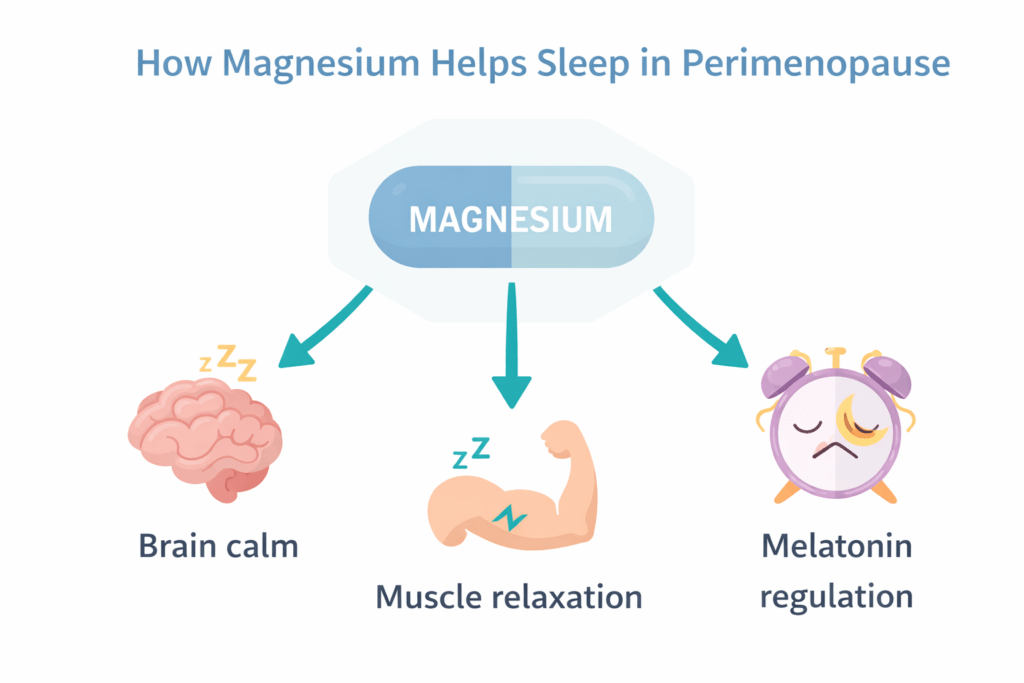
While it is not a cure for insomnia, many women use magnesium as part of a broader sleep strategy during perimenopause.
Before choosing a supplement, it’s important to understand that the form of magnesium matters.
What to Look for in a Magnesium Supplement
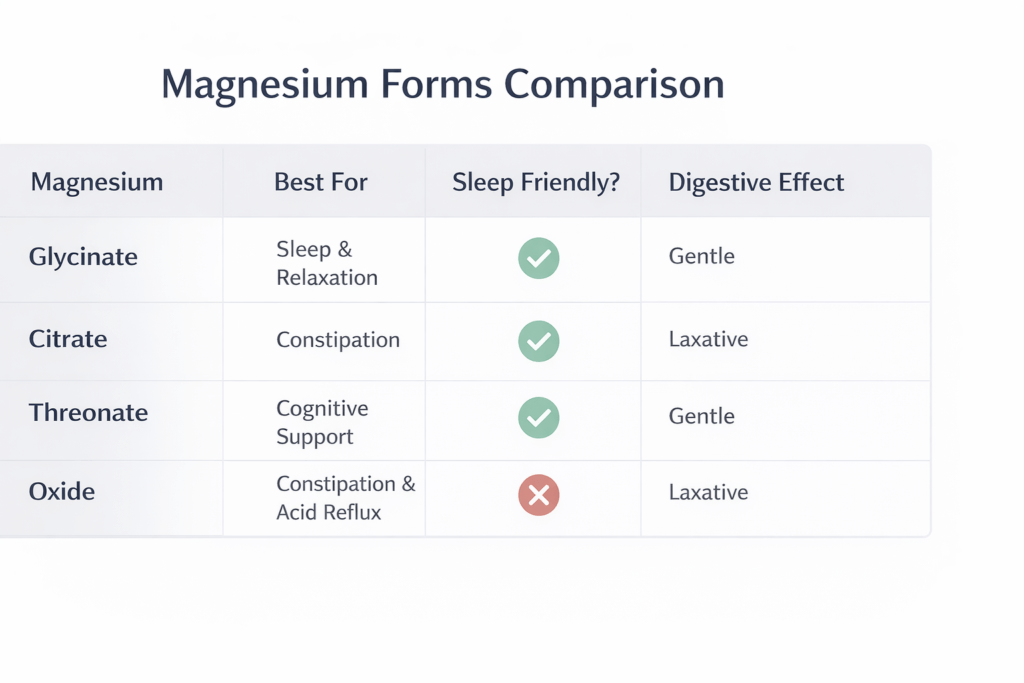
1. Form
Magnesium glycinate
Best for relaxation and falling asleep.
Magnesium threonate
May support cognitive calm and mental clarity.
Avoid magnesium oxide for sleep support, as it has low absorption.
2. Dosage
Most women use between 200–400 mg of elemental magnesium daily.
Starting lower and increasing gradually is often recommended. Most women start with 200 mg in the evening and increase if needed. Higher doses may cause digestive discomfort in some people.
3. Quality matters
Choose brands that test for purity and heavy metals. Independent third-party testing helps ensure the product contains what the label claims.
Also check the ingredient list and avoid products with unnecessary fillers, artificial colors, or added sugars.
Top 3 Magnesium Supplements for Perimenopause Sleep
1. Luma Nutrition Magnesium Glycinate 1000mg
Best Overall for Sleep Support
• Form: Magnesium glycinate
• Elemental dose: 200 mg per 2 capsules
• Third-party tested: Yes
• Best for: Falling asleep and easing nighttime tension
• Price range: Around $35–40
Magnesium glycinate is widely considered one of the most gentle and well-absorbed forms of magnesium. That’s why it’s often chosen by women who struggle with nighttime restlessness or difficulty winding down.
Luma Nutrition stands out for its clean ingredient profile, strong customer reviews, and straightforward formula without unnecessary additives. With 200 mg of elemental magnesium per serving, it’s also easy to adjust the dose gradually if needed.
👉 Check current price on Amazon
2. Jarrow Formulas MagMind (Magnesium L-Threonate)
Best for Stress and Racing Thoughts
- Form: Magnesium threonate
- Dose: 144 mg per 3 capsules
- Third-party tested: Yes
- Best for: Mental restlessness and racing thoughts at night
- Price range: Around $35–45
Magnesium L-threonate is known for its ability to cross the blood-brain barrier more effectively than many other forms. Because of this, it’s often chosen by women who experience racing thoughts, mental overstimulation, or difficulty “switching off” at night.
Jarrow Formulas has a strong reputation in the supplement space and offers a clean, focused formula. While it contains less elemental magnesium per serving than some other forms, it’s typically selected for its targeted support of mental clarity rather than overall magnesium intake.
👉 Check current price on Amazon
3. Bronson Magnesium Glycinate
Best Budget Option
- Form: Magnesium glycinate
- Elemental dose: 200 mg per 2 capsules
- Third-party tested: Yes
- Best for: Affordable daily magnesium support
- Price range: Around $20–30
Magnesium glycinate remains one of the most popular forms for sleep and muscle relaxation, and this option offers the same form at a more accessible price point.
Bronson stands out for delivering a high capsule count, solid customer reviews, and a simple formula without unnecessary extras. For women who want consistent magnesium support without spending premium prices, this is a practical and cost-effective choice.
👉 Check current price on Amazon
Comparison Table
| Product | Form | Elemental Magnesium | Third-Party Tested | Best For | Price Range |
| Luma Nutrition Magnesium Glycinate | Glycinate | 200 mg per serving | Yes | Falling asleep & nighttime tension | $$ |
| Jarrow MagMind (L-Threonate) | L-Threonate | 144 mg per serving | Yes | Racing thoughts & mental restlessness | $$$ |
| Bronson Magnesium Glycinate | Glycinate | 200 mg per serving | Yes | Budget-friendly daily support | $ |
This article is for informational purposes only and is not intended as medical advice. Always consult a qualified healthcare professional before starting any supplement.
FAQ
Is magnesium safe during perimenopause?
Magnesium is generally considered safe for healthy adults when used within recommended amounts. During perimenopause, many women use it as part of a broader sleep and stress-support routine.
If you have kidney disease, take prescription medications, or are unsure about dosage, consult a healthcare professional before starting supplementation.
How long does magnesium take to work for sleep?
Magnesium tends to work gradually. While some women notice subtle changes within the first week, most need 2–4 weeks of consistent use to experience meaningful improvements in sleep quality.
Patience and consistency are key.
Can magnesium help with night sweats?
Magnesium does not directly stop night sweats. However, by supporting muscle relaxation and nervous system balance, it may contribute to more stable, restorative sleep overall.
When should I take magnesium for sleep?
Many women take magnesium 1–2 hours before bedtime as part of their evening wind-down routine. Taking it with a small meal may help reduce the risk of digestive discomfort.
Final Recommendation
If your main struggle is difficulty falling asleep or nighttime tension, a high-quality magnesium glycinate supplement is often a sensible place to start.
If mental overstimulation or racing thoughts are your primary concern, magnesium L-threonate may be worth considering.
Magnesium is not a standalone solution, but for many women navigating perimenopause, it can be a supportive foundation for improving sleep.
Affiliate disclosure: This post may contain affiliate links. If you purchase through these links, we may earn a commission at no additional cost to you.