

Best Magnesium for Perimenopause Sleep: What Matters Most
If you’re searching for the best magnesium for perimenopause sleep, the most important thing to understand is this:
The form of magnesium matters more than the brand.
Different types of magnesium support sleep in different ways. Some help your body relax physically, while others target mental overstimulation and racing thoughts.
Magnesium is one of the most popular supplements for sleep, but it’s not the only option. If you’re comparing different approaches, you can also read our guide on magnesium vs melatonin for sleep.
Quick Picks
If you’re not in the mood for reading and just want a straightforward answer, start here:
Best overall for sleep Magnesium glycinate
Doctor’s Best High Absorption Magnesium
A reliable, well-absorbed option that supports relaxation and falling asleep
Easy starting point if you’re new to magnesium.

Best for racing thoughts Magnesium threonate
Jarrow MagMind (L-Threonate)
A more targeted option for calming a busy mind at night

Compare more magnesium glycinate options in our full guide.
Affiliate disclosure: This post may contain affiliate links. If you purchase through these links, we may earn a commission at no additional cost to you.
Why Sleep Gets Worse During Perimenopause
During perimenopause, your hormones don’t just decline, they fluctuate.
Progesterone drops, which reduces its natural calming effect.
Estrogen shifts can affect temperature regulation.
Cortisol patterns often become irregular.
This often leads to:
- Difficulty falling asleep
- Waking up during the night
- Lighter, more fragmented sleep
- Feeling “tired but wired” in the evening
Magnesium doesn’t fix all of this, but it can support the nervous system and make it easier for your body to wind down.
TIP: If you want a broader overview of different options, you can also explore our guide on the best supplements for perimenopause sleep.
How Magnesium May Help With Sleep
Magnesium plays a role in regulating the nervous system and muscle relaxation.
For many women, this can mean:
- Less physical tension at night
- A calmer transition into sleep
- Fewer stress-related wake-ups
It’s not a sleep medication, but it can be a useful foundation alongside other habits.
Choosing the right dose is just as important, which we explain in our guide on magnesium dosage for sleep during perimenopause.

While it is not a cure for insomnia, many women use magnesium as part of a broader sleep strategy during perimenopause.
The Most Important Factor: Magnesium Form
Not all magnesium works the same way. This is where most people go wrong.
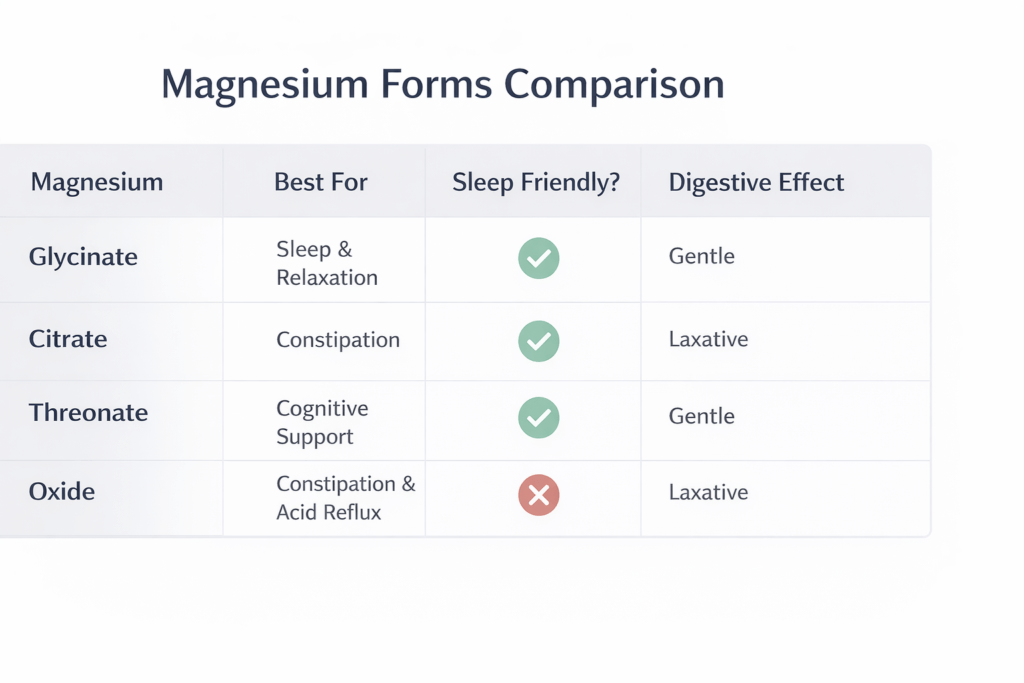
Magnesium glycinate
Best for most sleep issues.
- Highly absorbable
- Gentle on digestion
- Supports physical relaxation
- Helps with falling asleep
This is usually the best starting point.
If you’re comparing different options, doses, and brands, you can see our full breakdown of the best magnesium glycinate supplements for sleep.
Magnesium threonate
Best for mental overstimulation.
- Supports brain function
- May help reduce racing thoughts
- Often used when you feel “wired” at night
This is more targeted, not always necessary for everyone.
Magnesium Forms to avoid for sleep
Magnesium oxide is commonly found in cheap supplements but has low absorption and is not ideal for sleep support.
Here’s a quick comparison of the most common magnesium forms:
How to Choose the Right Magnesium
1. Start with the right dose
Most women use:
- 200–400 mg elemental magnesium per day
A good starting point is around 200 mg in the evening, then adjusting if needed.
2. Pay attention to quality
Look for:
- Third-party testing
- Clear labeling of elemental magnesium
- Minimal fillers or additives
3. Match the supplement to your symptoms
- Trouble falling asleep → glycinate
- Nighttime tension → glycinate
- Racing thoughts → threonate
When Magnesium Is Not Enough
Sleep during perimenopause is often multi-factorial.
Magnesium helps, but it works best together with:
- A consistent sleep routine
- Managing evening stress
- Temperature regulation
If you want to improve sleep more broadly, you can also read our guide on how to improve sleep during perimenopause.
This article is for informational purposes only and is not intended as medical advice. Always consult a qualified healthcare professional before starting any supplement.
FAQ
Is magnesium safe during perimenopause?
Magnesium is generally considered safe for healthy adults when used within recommended amounts. During perimenopause, many women use it as part of a broader sleep and stress-support routine.
If you have kidney disease, take prescription medications, or are unsure about dosage, consult a healthcare professional before starting supplementation.
How long does magnesium take to work for sleep?
Magnesium tends to work gradually. While some women notice subtle changes within the first week, most need 2–4 weeks of consistent use to experience meaningful improvements in sleep quality.
Patience and consistency are key.
Can magnesium help with night sweats?
Magnesium does not directly stop night sweats. However, by supporting muscle relaxation and nervous system balance, it may contribute to more stable, restorative sleep overall.
When should I take magnesium for sleep?
Many women take magnesium 1–2 hours before bedtime as part of their evening wind-down routine. Taking it with a small meal may help reduce the risk of digestive discomfort.
Final Recommendation
If you’re still unsure which option to choose, magnesium glycinate remains the safest starting point for most women looking for the best magnesium for perimenopause sleep.
If mental overstimulation or racing thoughts are your primary concern, magnesium L-threonate may be worth considering.
Magnesium is not a standalone solution, but for many women navigating perimenopause, it can be a supportive foundation for improving sleep.
Affiliate disclosure: This post may contain affiliate links. If you purchase through these links, we may earn a commission at no additional cost to you.