
If you’re struggling with sleep during perimenopause, magnesium is often one of the first supplements people turn to. But knowing the right magnesium dosage for sleep can make a big difference in how well it actually works.
Too little may not have any effect, while too much can cause side effects like digestive discomfort. During perimenopause, finding the right balance depends on your body, your symptoms, and the type of magnesium you choose.
How much magnesium should you take for sleep during perimenopause?
For most women, a typical magnesium dosage for sleep falls between 200 and 400 mg per day.
This range is often enough to support relaxation, reduce muscle tension, and improve sleep quality without causing unwanted side effects.
- 200 mg → gentle starting dose
- 300 mg → moderate support
- 400 mg → stronger effect (upper common range)
If you are unsure where to start, it’s usually best to begin with a lower dose and increase gradually.
Magnesium dosage recommendations for women in perimenopause
Magnesium needs can vary depending on your symptoms. During perimenopause, sleep issues are often linked to stress, hormonal changes, and increased nervous system sensitivity. It plays a role in regulating the nervous system and sleep quality, which has been widely studied. You can read more about how magnesium supports sleep here: magnesium and sleep.
This means the ideal magnesium dosage for sleep during perimenopause is not just about numbers, but about how your body responds.
- For stress and tension → 200–300 mg
- For frequent waking → 300–400 mg
- For light or restless sleep → 250–350 mg
If your sleep issues are linked to cortisol or feeling “wired at night,” magnesium can help calm the nervous system. You can read more about this in our guide on cortisol and sleep during perimenopause.
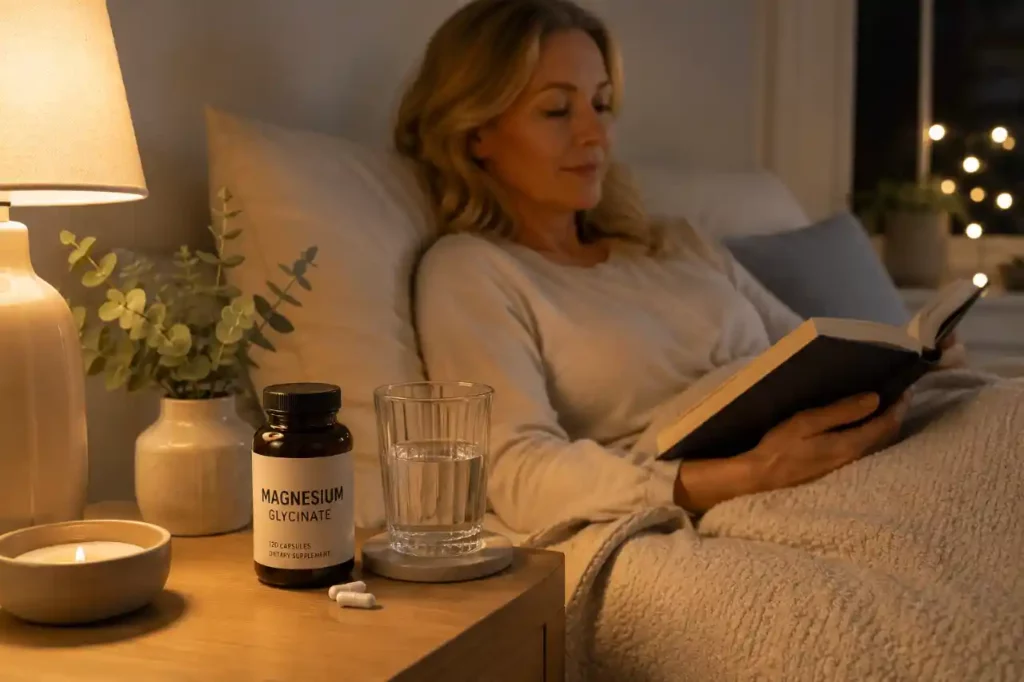
Best type of magnesium for sleep
Not all magnesium supplements work the same way. Some forms are better suited for sleep because they are more calming and easier for the body to absorb.
- Magnesium glycinate → best for relaxation and sleep
- Magnesium citrate → good absorption but may affect digestion
- Magnesium oxide → lower absorption, less ideal for sleep
If you want a deeper comparison, see our guide to the best magnesium glycinate for sleep.
When to take magnesium for sleep
Timing can also affect how well magnesium works.
Most people get the best results by taking magnesium 30 to 60 minutes before bed. This gives the body time to start relaxing before sleep.
Some women split their dose into two parts, one in the evening and one before bed, to help the effect last longer through the night.

Can you take magnesium every night?
Magnesium is generally safe for daily use when taken within recommended ranges.
Many women take magnesium every night during perimenopause to support ongoing sleep issues, especially when stress and hormonal changes are involved.
However, it’s always a good idea to adjust based on how your body responds.
Common mistakes with magnesium dosage
- Taking too high a dose too quickly
- Choosing the wrong form of magnesium
- Expecting immediate results
- Not addressing other sleep factors like stress or temperature
Magnesium works best as part of a broader sleep strategy. If you want a complete overview, see our guide to the best supplements for perimenopause sleep.
FAQs
What is the best magnesium dosage for sleep?
Most people benefit from 200 to 400 mg per day, depending on their needs and sensitivity.
Is 400 mg of magnesium too much?
For many people, 400 mg is within a safe range, but higher doses may cause digestive side effects.
Which magnesium is best for sleep?
Magnesium glycinate is often the best option because it is calming and easy to absorb.
Final thoughts
Finding the right magnesium dosage for sleep during perimenopause is often about starting simple and adjusting based on your body.
For many women, magnesium becomes one of the most reliable tools for improving sleep, especially when combined with the right routines and other gentle supports.
Affiliate disclaimer
Some links in this article may be affiliate links, which means we may earn a small commission at no extra cost to you. We only recommend products we believe are genuinely helpful for sleep during perimenopause.