
Magnesium is one of the most talked-about supplements for perimenopause. It’s often recommended for better sleep, lower stress levels, and muscle relaxation—but can it actually help with hot flashes?
If you’ve experienced them, you know how unpredictable they can be. One minute you’re comfortable, and the next you’re kicking off the covers, opening a window, or wondering why your body suddenly feels like it’s overheating.
The short answer is maybe. Magnesium isn’t a proven treatment for hot flashes, but there are several reasons why some women find it helpful, particularly when their symptoms are linked to poor sleep, stress, or muscle tension.
Quick Summary
- Magnesium is not a guaranteed treatment for hot flashes.
- Some women report fewer or less intense hot flashes when taking magnesium.
- Research is limited, but early findings are promising.
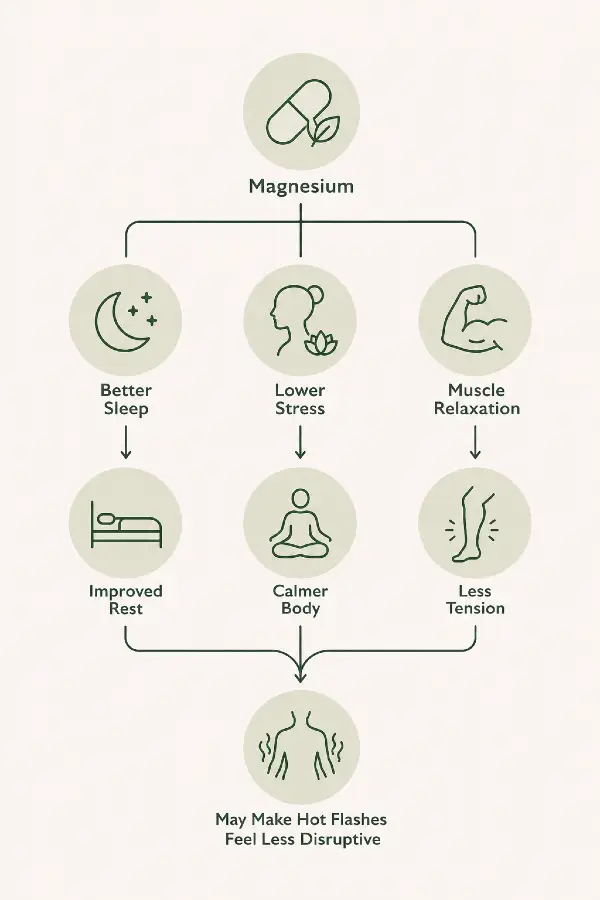
- Magnesium may support better sleep, relaxation, and stress management.
- Magnesium glycinate is often the preferred form for women in perimenopause.
- Results vary from person to person.
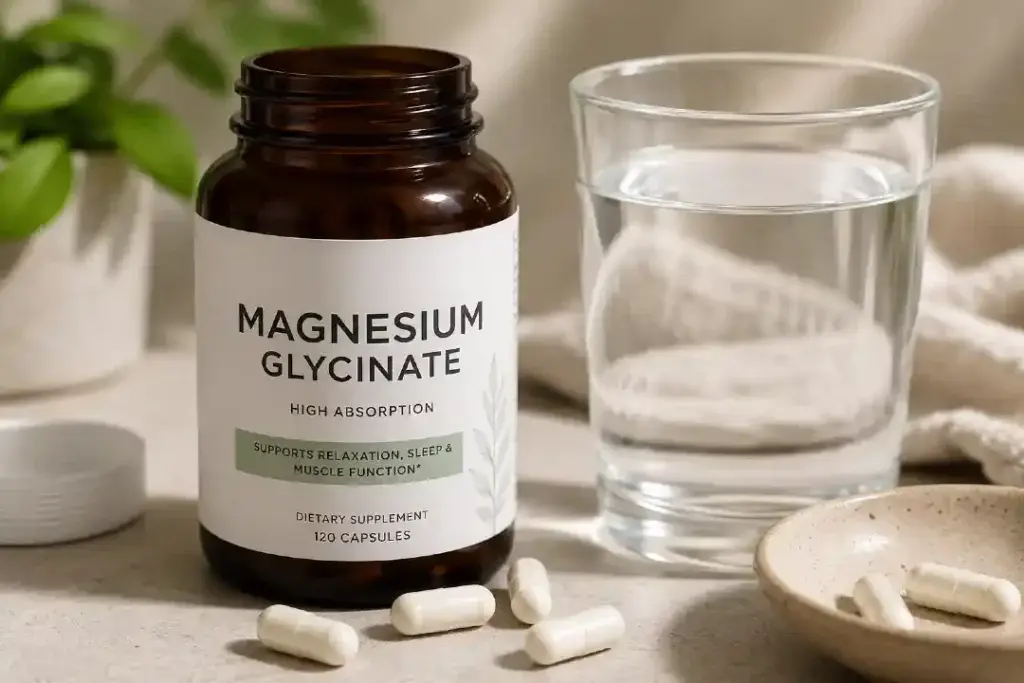
Why Magnesium Is Often Recommended During Perimenopause
Magnesium is involved in hundreds of processes throughout the body.
It helps regulate muscle and nerve function, supports sleep, contributes to energy production, and plays a role in how the body responds to stress.
Those functions might not sound directly related to hot flashes at first, but many women notice that their symptoms become worse when they’re tired, anxious, stressed, or not sleeping well.
That’s where magnesium becomes interesting.
Rather than targeting hot flashes directly, magnesium may help improve some of the factors that can make them feel more frequent or more disruptive.
For example, a bad night’s sleep often leads to increased stress the next day. Increased stress can make hot flashes feel more noticeable. Better sleep doesn’t necessarily stop hot flashes from happening, but it can make them easier to cope with.
If nighttime symptoms are a major issue for you, read our guide on why hot flashes are worse at night.
What Does the Research Say About Magnesium for Hot Flashes During Perimenopause?
Research on magnesium for hot flashes is still fairly limited.
A few small studies have suggested that magnesium supplementation may reduce the frequency or severity of hot flashes in some women. However, larger and more definitive studies are still needed.
At the moment, magnesium isn’t considered a first-line treatment for hot flashes, and most healthcare providers would be careful about promising specific results.
That said, the lack of strong evidence doesn’t necessarily mean magnesium isn’t helping anyone.
Many women take magnesium because it may provide benefits beyond hot flashes, including support for sleep quality, relaxation, muscle recovery, and general wellbeing. When several symptoms improve at the same time, hot flashes can sometimes feel less overwhelming.
If you’d like to learn more about evidence-based approaches for managing menopausal symptoms, the U.S. National Center for Complementary and Integrative Health (NCCIH) provides an excellent overview of current research and complementary therapies.
Could Magnesium Deficiency Make Hot Flashes Worse?
There is no clear evidence that magnesium deficiency directly causes hot flashes. However, it may play a role in some of the symptoms that often make hot flashes harder to deal with.
Low magnesium levels have been linked to issues such as poor sleep, fatigue, muscle cramps, and increased sensitivity to stress. If you’ve ever noticed that your hot flashes feel worse after several nights of poor sleep or during particularly stressful periods, you’re not imagining it. Many women report the same pattern.
That doesn’t mean magnesium deficiency is the root cause of hot flashes. Hormonal fluctuations remain the main driver during perimenopause. But if your magnesium intake is low, addressing it may help improve some of the factors that can make symptoms feel more disruptive.
In other words, magnesium is unlikely to stop hot flashes by itself. However, by supporting better sleep and helping your body cope with stress, it may help some women experience hot flashes as less intense, or simply easier to manage.
Could Magnesium Help Night Sweats Too?
Possibly.
Night sweats and hot flashes are closely related. In many cases they’re essentially the same process happening at different times of day.
While magnesium hasn’t been proven to stop night sweats directly, some women find that better sleep and reduced nighttime restlessness make a noticeable difference.
If night sweats are one of your biggest challenges, you may also find helpful strategies in our guide to night sweats during perimenopause.
Which Type of Magnesium Is Best for Hot Flashes?
One thing that often causes confusion is that “magnesium” isn’t just one thing.
There are several different forms available, and they can affect the body in different ways.
Magnesium Glycinate
Magnesium glycinate is often considered the best option for women dealing with sleep problems, stress, or nighttime symptoms.
It’s generally well absorbed and tends to be gentle on the digestive system.
For many women in perimenopause, this is usually the first form worth considering.
Magnesium Citrate
Magnesium citrate is another popular form.
It’s well absorbed but may have a mild laxative effect, which some people appreciate and others don’t.
Magnesium Oxide
Magnesium oxide is commonly found in inexpensive supplements.
However, it’s generally less well absorbed than glycinate or citrate and is often chosen for digestive support rather than symptom management.
How Much Magnesium Should You Take?
There isn’t one perfect dosage that works for everyone.
Many magnesium supplements provide between 200 and 400 mg of elemental magnesium per day.
If you’re trying magnesium for the first time, it often makes sense to start at the lower end of that range and see how your body responds.
It’s also worth remembering that supplements aren’t the only source of magnesium.
- Pumpkin seeds
- Almonds
- Cashews
- Spinach
- Black beans
- Avocados
Eating magnesium-rich foods regularly may help support your overall intake, even if you also choose to take a supplement.
Should You Get Magnesium from Food or Supplements?
For most people, it’s always a good idea to eat magnesium-rich foods as part of a balanced diet. However, food alone isn’t always enough for everyone. If you’re finding it difficult to meet your needs through diet—or you’re specifically looking for support for sleep or other perimenopause symptoms—a magnesium supplement may be worth considering.
If you decide to try a supplement, our guide to the best magnesium supplements for perimenopause compares some of the most commonly recommended options.

How Long Does It Take to Notice a Difference?
Magnesium isn’t something that works overnight.
If it helps, most women notice changes gradually over a period of several weeks.
The first improvements are often related to sleep quality or relaxation rather than hot flashes themselves.
You might find that you’re sleeping more deeply, waking up less often, or feeling calmer during the day. Those changes can have a ripple effect on how manageable your hot flashes feel.
Should You Try Magnesium for Hot Flashes?
For many women, magnesium is a reasonable supplement to consider.
It’s relatively inexpensive, widely available, and may support several common perimenopause symptoms at the same time.
However, it’s important to keep expectations realistic.
Magnesium is unlikely to eliminate hot flashes completely. Think of it as one possible piece of a broader symptom-management strategy rather than a standalone solution.
Magnesium Works Best as Part of a Bigger Strategy
One reason magnesium can seem to work well for some women and not for others is that hot flashes rarely have a single trigger.
Hormonal changes are the underlying cause during perimenopause, but everyday factors can influence how often hot flashes occur and how intense they feel. Common triggers include alcohol, caffeine, stress, and sleeping in an overheated bedroom.
For example, you might notice that a glass of wine, a poor night’s sleep, or a particularly stressful week makes your symptoms feel more difficult to manage. In those situations, magnesium may still help, especially if sleep and stress are part of the picture. But it isn’t a fix for every trigger.
That’s why many women see the best results when magnesium is combined with other lifestyle adjustments. If you’re looking for additional ideas, you may also find our guide on How to Reduce Hot Flashes During Perimenopause Naturally helpful.
If you’re exploring multiple options, our guide to the best supplements for hot flashes during perimenopause compares some of the most commonly recommended choices.
Frequently Asked Questions
Can magnesium stop hot flashes completely?
No. Magnesium is not considered a proven treatment for hot flashes, and most women should not expect it to eliminate symptoms completely. However, some women find that magnesium helps reduce how disruptive hot flashes feel, particularly when sleep and stress improve.
Which magnesium is best for hot flashes?
Magnesium glycinate is often considered the best option because it is well absorbed and commonly used to support relaxation and sleep.
How long does magnesium take to work?
If magnesium helps, improvements are usually noticed over several weeks rather than days.
Can magnesium help with night sweats?
Possibly. While magnesium has not been proven to stop night sweats directly, some women find that better sleep quality and reduced nighttime restlessness make night sweats easier to manage.
Final Thoughts
Magnesium for hot flashes during perimenopause isn’t a miracle cure, but it may be worth trying, especially if you’re also dealing with poor sleep, stress, nighttime waking, or muscle tension.
The research is still developing, and results vary from person to person. Some women notice a meaningful difference, while others don’t see much change at all.
What makes magnesium appealing is that even if it doesn’t dramatically reduce hot flashes, it may support other areas of health that often become more challenging during perimenopause.
Sometimes feeling better overall is enough to make hot flashes feel a little less disruptive.
If you’re looking for a low-risk supplement that may support sleep, stress management, and overall wellbeing, magnesium is one of the more reasonable options to try. Just remember that results vary, and it’s most effective when combined with other strategies for managing hot flashes.
Affiliate Disclosure: Some links on this site may be affiliate links. This means we may earn a small commission if you make a purchase through those links, at no extra cost to you. We only recommend products we believe may be useful to our readers.