
You’re tired. Your body feels ready for sleep. But the moment you lie down, your mind starts racing or your body feels strangely alert.
This is one of the most frustrating parts of perimenopause. Feeling exhausted, but still not able to fall asleep.
If this sounds familiar, you’re not alone. Hormonal changes can affect not just how you sleep, but how easily you fall asleep in the first place.
If you’re wondering how to fall asleep faster during perimenopause, the good news is that small, simple changes can help your body transition into sleep more easily.

Quick Ways to Fall Asleep Faster
When your body feels wired, trying harder usually doesn’t help. If anything, it tends to make it worse. It’s more about helping your system slow down.
1. Slow your breathing
Try this for a few minutes:
- Inhale for 4 seconds
- Exhale for 6 to 8 seconds
- Repeat slowly
It may sound simple, but longer exhales can help signal safety to your nervous system and make it easier to relax.
2. Warm your body, then let it cool down
A warm shower or bath about 30 to 60 minutes before bed may help your body prepare for sleep.
Your body temperature rises slightly, then drops afterward. That cooling effect can support your natural sleep rhythm.
3. Do a body scan instead of trying to sleep
Instead of thinking “I need to sleep,” give your mind something simple to follow.
- Start at your toes
- Slowly relax each part of your body
- Move upward, one area at a time
This can help shift attention away from stress, planning, or frustration.
4. Get out of bed if you’re wide awake
If you’ve been awake for a while and feel increasingly frustrated, it can help to get up for a short time.
Sit somewhere dimly lit and do something quiet. Avoid your phone if possible. The goal is not to start your day, but to reduce the pressure around sleep.
5. Lower stimulation earlier in the evening
During perimenopause, your nervous system may become more sensitive to stress, light, sound, and stimulation.
Try reducing bright lights, screens, intense conversations, or stressful tasks in the last hour before bed. Even small changes can make your evening feel calmer.
Why It Can Be Harder to Fall Asleep During Perimenopause
This isn’t in your head. There are real biological reasons behind it.
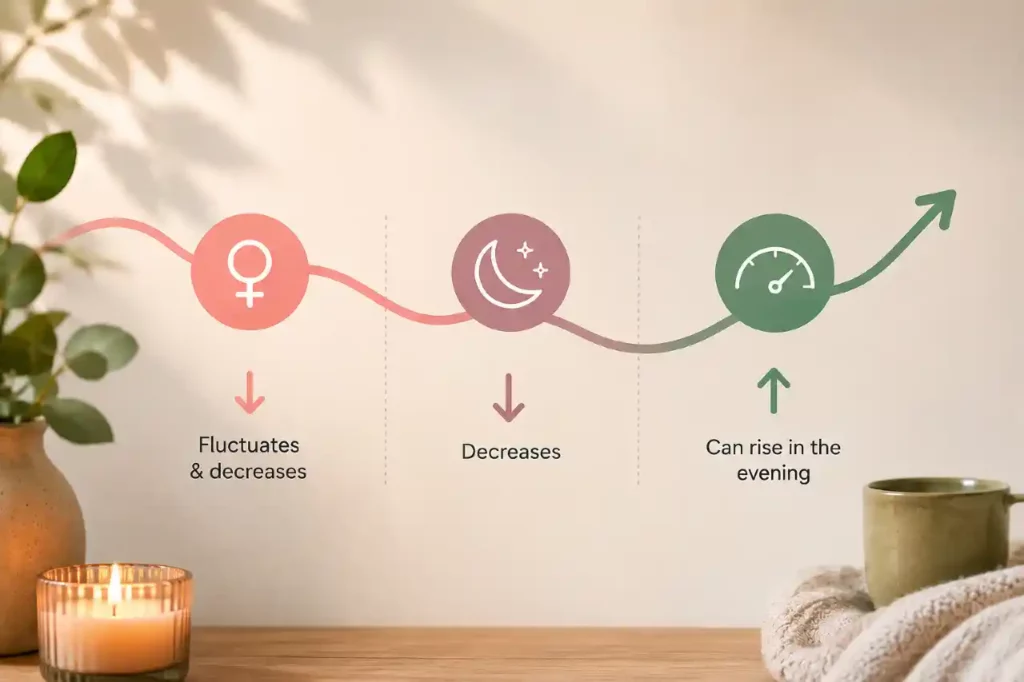
Hormones like estrogen and progesterone help regulate both mood and sleep. When they start to fluctuate, your body can have a harder time switching into a relaxed state.
At the same time, cortisol can become less stable. Instead of dropping in the evening, it may stay higher, which can leave you feeling tired but still alert.
Research suggests that hormonal changes during perimenopause can contribute to sleep difficulties, including problems falling asleep and staying asleep.
That “tired but wired” feeling is one reason falling asleep can suddenly feel much harder than it used to.
Evening Habits That Make Falling Asleep Easier
You don’t need a perfect nighttime routine. But your body does respond well to consistency and clear signals.
Keep evenings predictable
Try to keep the last part of your day fairly consistent. Eating, winding down, and going to bed at similar times can help your body understand what comes next.
Don’t wait until you’re overtired
Going to bed too late can sometimes trigger a second wind. This may feel like energy, but it can actually be a stress response.
If you notice that you feel sleepy earlier in the evening, but suddenly alert later, try starting your wind-down routine before that second wind arrives.
Write down what’s on your mind
If your thoughts get louder at night, try writing down tomorrow’s tasks or anything you’re worried about.
This gives your brain a place to put the information, instead of trying to hold onto it when you’re trying to rest.
Supplements That May Help You Fall Asleep Faster
Some supplements may support relaxation and make it easier to fall asleep. They work best when they’re part of a consistent evening routine, not as a replacement for one.
Magnesium
Magnesium can help support relaxation and calm the nervous system.
It may be especially helpful if you feel physically tense, restless, or unable to fully unwind at night. You can read more in our guide on magnesium for perimenopause sleep.
Glycine
Glycine is an amino acid that may support relaxation and healthy body temperature regulation, both of which can matter when you’re trying to fall asleep.
Melatonin
Melatonin may be useful if your sleep timing feels off or if you struggle to feel sleepy at night.
For many people, it works best as an occasional or short-term option rather than something to rely on every night. If you’re unsure what to choose, see our guide on magnesium vs melatonin for sleep.
You can also explore our full guide to the best supplements for perimenopause sleep if you want a broader overview.
This article can contain affiliate links. If you buy through these links, we may earn a small commission at no extra cost to you.
What to Do If Your Mind Won’t Stop
Racing thoughts are very common during perimenopause.
Instead of trying to stop them completely, it often helps to give your mind something simple to focus on:
- counting your breaths
- repeating a word or phrase
- visualizing something neutral
Your mind usually settles more easily when it has something gentle to return to.
It can also help to remind yourself that rest still counts. Even if you’re not asleep yet, lying quietly with your eyes closed is still giving your body a chance to recover.
FAQ
Why can’t I fall asleep even when I’m tired?
You may feel tired, but your nervous system may still be activated. During perimenopause, hormonal changes can make it harder for your body to shift from alert to relaxed.
How long should it take to fall asleep?
For many people, falling asleep takes around 10 to 20 minutes. If it regularly takes much longer, stress, hormonal changes, evening stimulation, or disrupted sleep patterns may be playing a role.
Is melatonin helpful during perimenopause?
Melatonin may help some women fall asleep faster, especially when sleep timing feels disrupted. However, it is often best used in low doses and not as the only long-term sleep strategy.
What helps most if I feel tired but wired?
Focus on calming your nervous system rather than forcing sleep. Slow breathing, dim light, a predictable evening routine, and reducing stimulation can all help your body feel safer and more ready for rest.
How to Fall Asleep Faster Tonight
If you’re struggling to fall asleep, you’re not alone. This is one of the most common sleep challenges during perimenopause.
And it’s rarely about doing something wrong.
More often, it’s your body needing a bit more help to shift from alert to relaxed.
Instead of trying to force sleep, focus on small signals: slow your breathing, reduce stimulation, and give your mind something simple to focus on.
You don’t need a perfect routine or a complete fix overnight. But helping your body unwind, even a little, can make it noticeably easier to fall asleep.